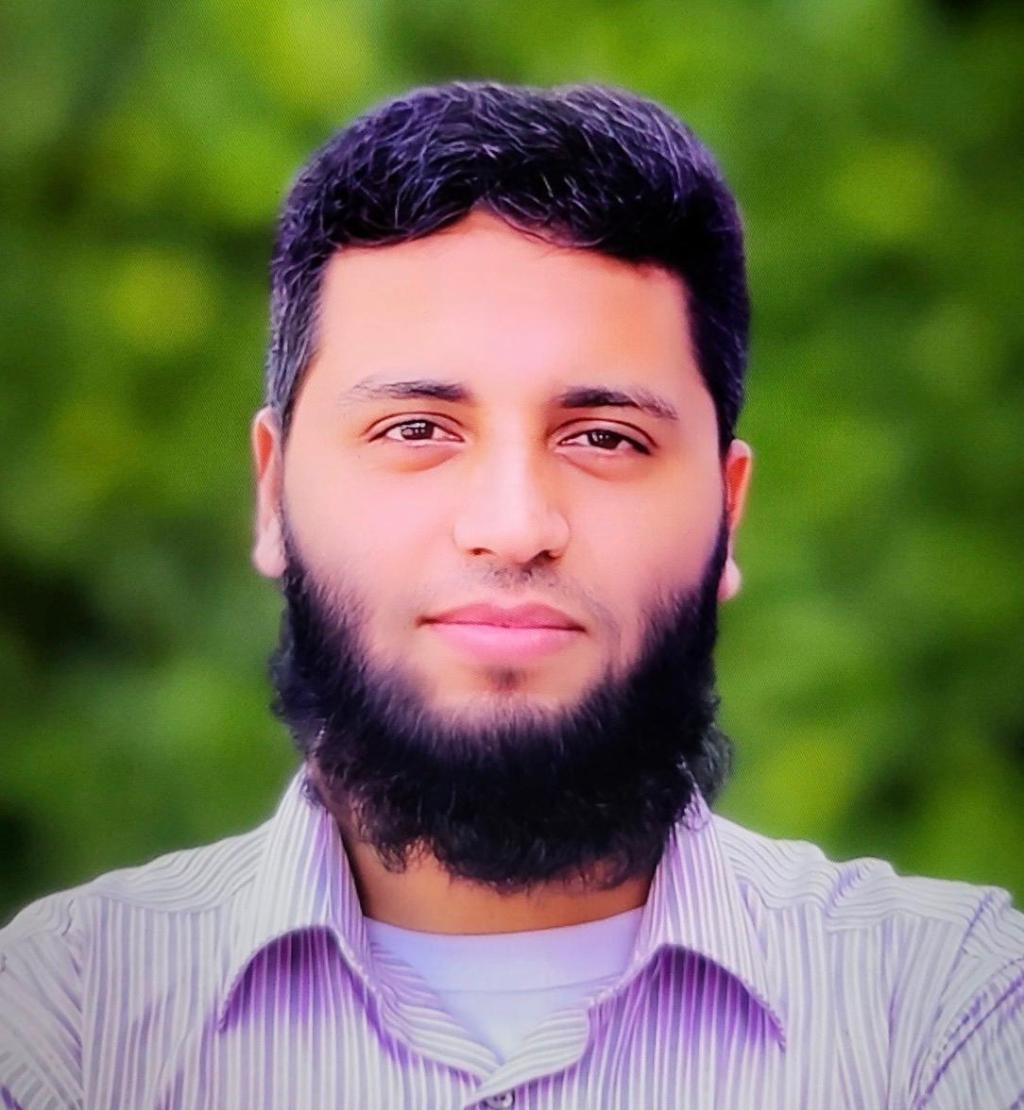
An insight into the life of an SKT Welfare Programmes Officer on the ground in Gaza
At six o’clock every morning, SKT Welfare aid worker Fadi Omar wakes on the sandy ground of the tent he built with his own hands.
He and his wife and two young children have lived here since being displaced from their home in southern Gaza.
Each day starts the same way – with exhaustion. Nights are restless and shallow – broken by the sounds of shelling, drones and scurrying rats.
Fadi says sleep no longer exists in the way it once did. Even in moments of quiet, fear hums in the background.
Before the war, his mornings began with the sound of birds outside his window. Now the only noise is the crash of jerrycans as families race to collect water from passing tankers.
Securing water has become the first, and often hardest, task of the day.
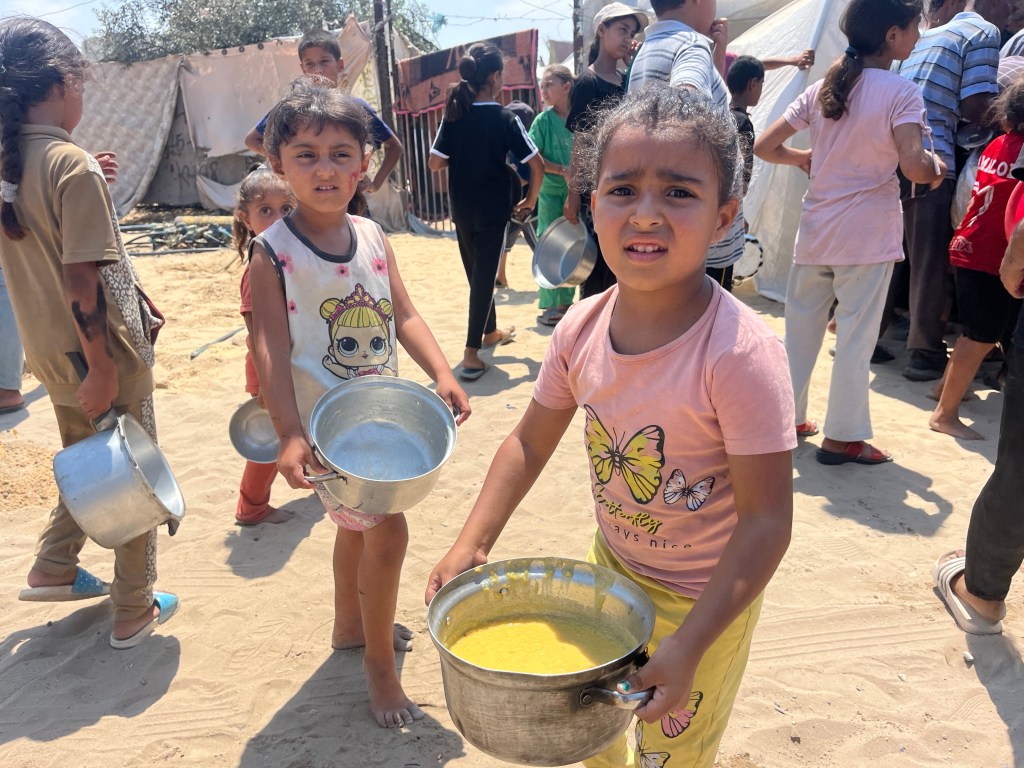
When supplies run out, Fadi walks 2km to a desalination plant to fetch just enough for his family to drink and wash. Thirst, he says, has become the greatest danger for those displaced.
Despite everything, mornings still bring small moments of grace. As sunlight filters through the seams of the tent, his children wake, laughing and playing on thin mattresses.
For Fadi and his wife, these minutes are a reminder of what they’re fighting for. Each new day feels like a blessing after another night of bombardment.
But life under canvas offers little comfort. The family has endured two winters in the tent, surviving freezing nights without gas or electricity.
Fadi remembers holding his eight-month-old daughter in his arms to keep her alive when her fingers turned blue from the cold.
“We are living,” he says, “in conditions harsher than anything people knew centuries ago, yet this is the 21st century.”
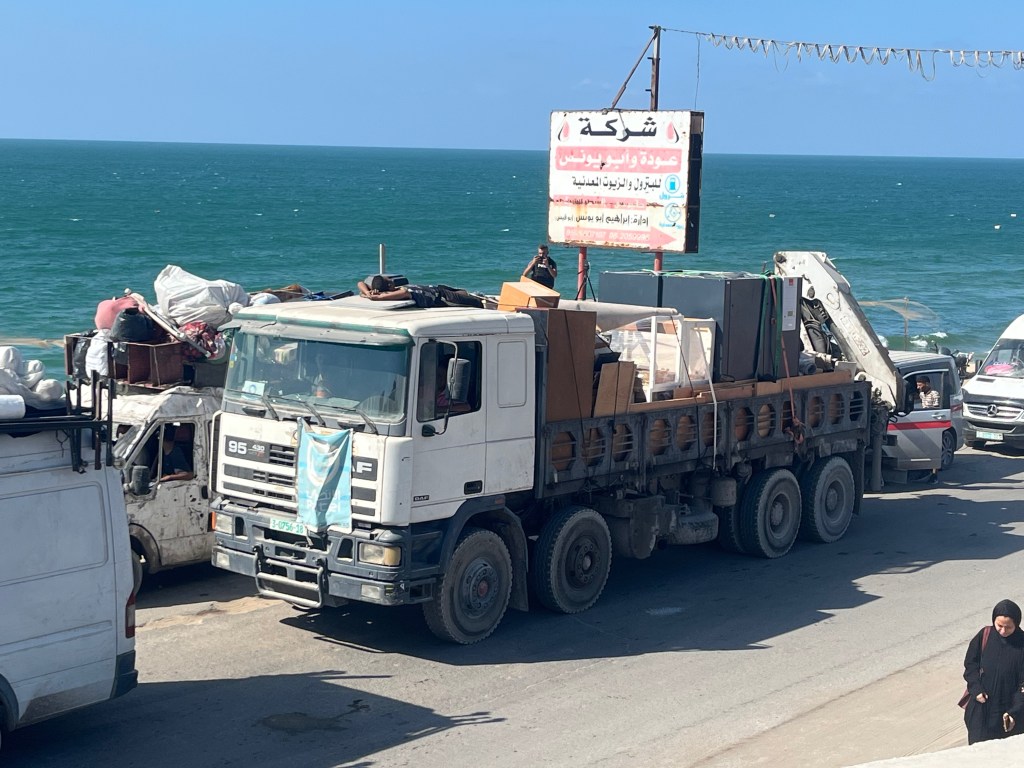
Every daily errand now requires miles of walking. With fuel prices soaring to hundreds of dollars a litre, transport has all but disappeared.
Fadi estimates he walks about 250km a month, hauling water, searching for food, and trying to find supplies for his children.
The local market is a picture of chaos, with makeshift stalls, extreme inflation and constant shortages.
Basic goods such as tomatoes have increased a hundredfold in price. Even with money in the bank, buying food is nearly impossible as banks remain closed and cash traders take huge fees.
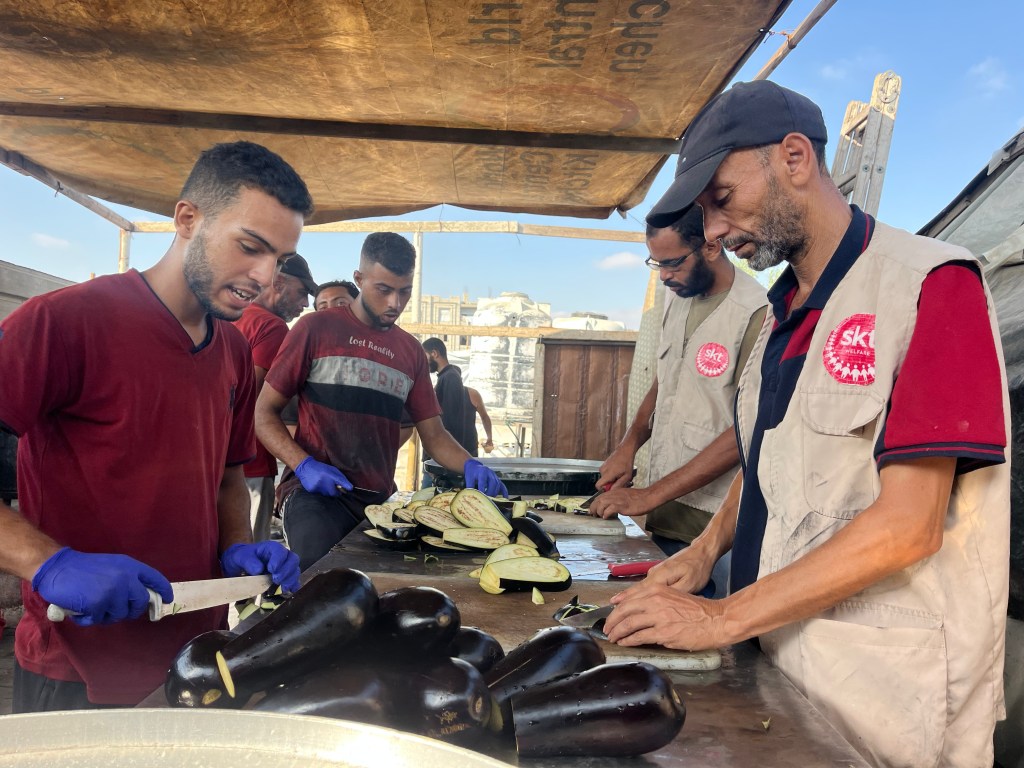
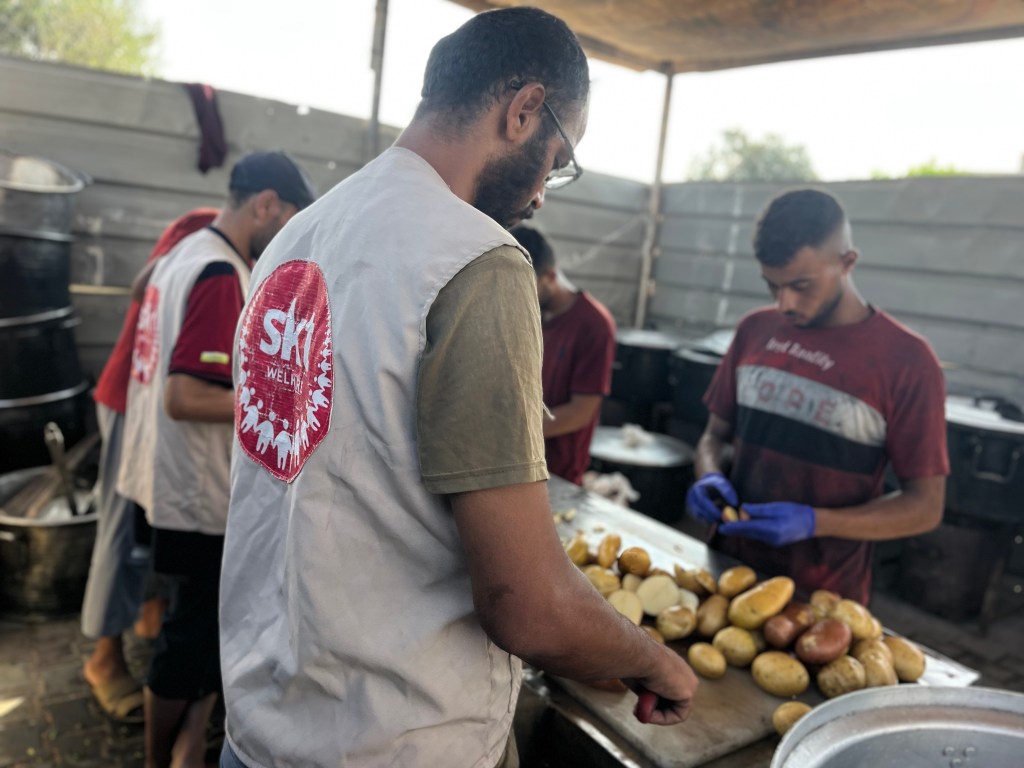
Cooking has become another struggle. With gas cut off, families rely on wood fires. His wife spends hours tending the flames, washing clothes by hand and teaching the children what she can.
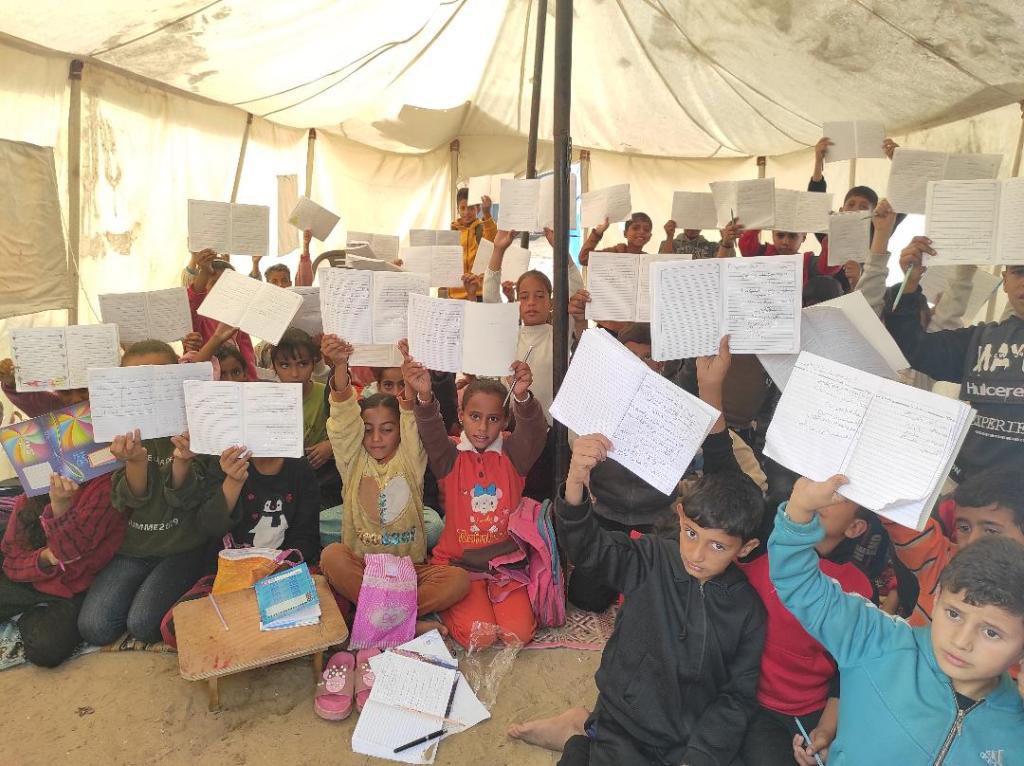
Their eight-year-old son, Yazan, helps fetch water and firewood – tasks that have replaced his education. For Fadi, it’s a constant reminder that the war has stolen his son’s childhood.
Electricity is scarce, so phones are charged through small solar panels when sunlight allows. Schools and parks have disappeared, leaving children with no safe spaces to learn or play.
Illness is common, and medicines have become almost impossible to find. Hospitals often turn families away, telling them to search elsewhere for the drugs they need.
Recently, Fadi’s three-year-old nephew was hit by shrapnel during an airstrike. The family carried him through the streets, moving between hospitals in search of help. He died after surgery. It is just one of countless tragedies that now define daily life in Gaza.
When night falls, exhaustion gives way to fear. The darker the sky, the heavier the bombardment becomes.
Fadi recalls one night when a suicide drone struck the tents beside theirs. He threw himself over his children as the explosion ripped through their neighbours’ shelter, killing a young girl and wounding several others. He returned home covered in blood that wasn’t his own.
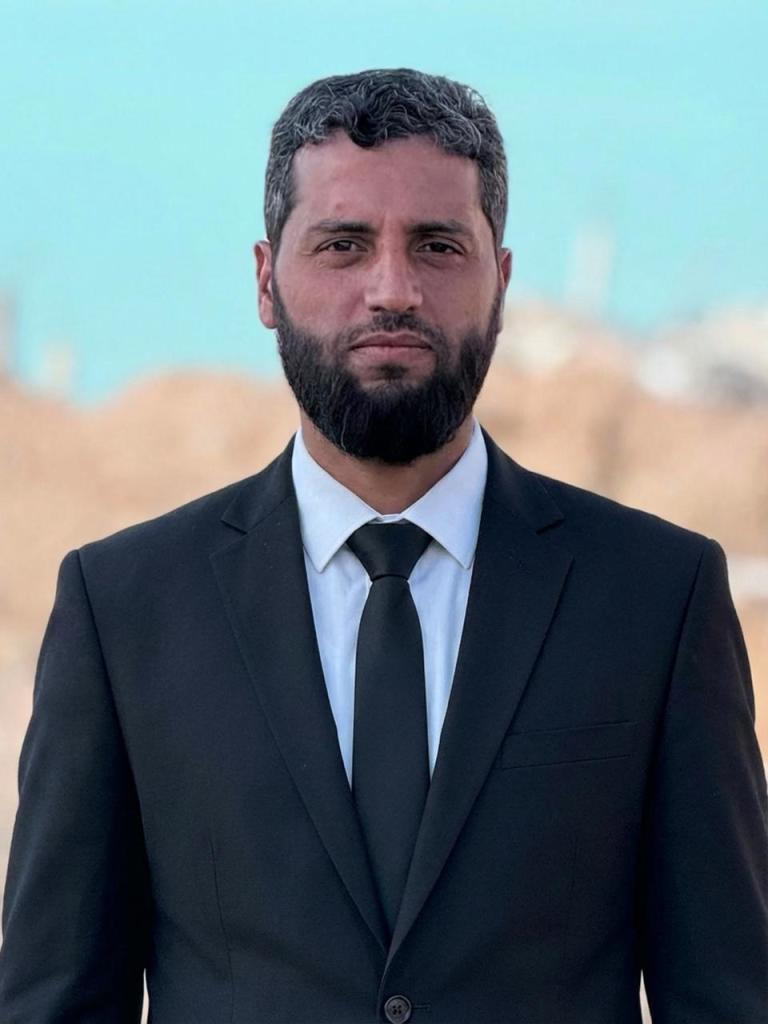
Despite the horror, he refuses to surrender to despair. Each evening, he and his wife hold their children and pray that the next day will be different, that they will one day live without fear. For Fadi, hope has become an act of resistance.
He describes Gaza as a place where families live under canvas that protects them from neither heat nor cold, while the sky rains down explosives in quantities greater than those dropped on Hiroshima and Nagasaki combined.
The victims, he says, are not soldiers, but ordinary people such as children, mothers, the elderly.
What Fadi lives each day is not ordinary life, but survival. Every sunrise feels both a burden and a miracle. “We wake up,” he says simply, “and somehow, we live.”




 Phone Calls from Palestine
Leave a comment