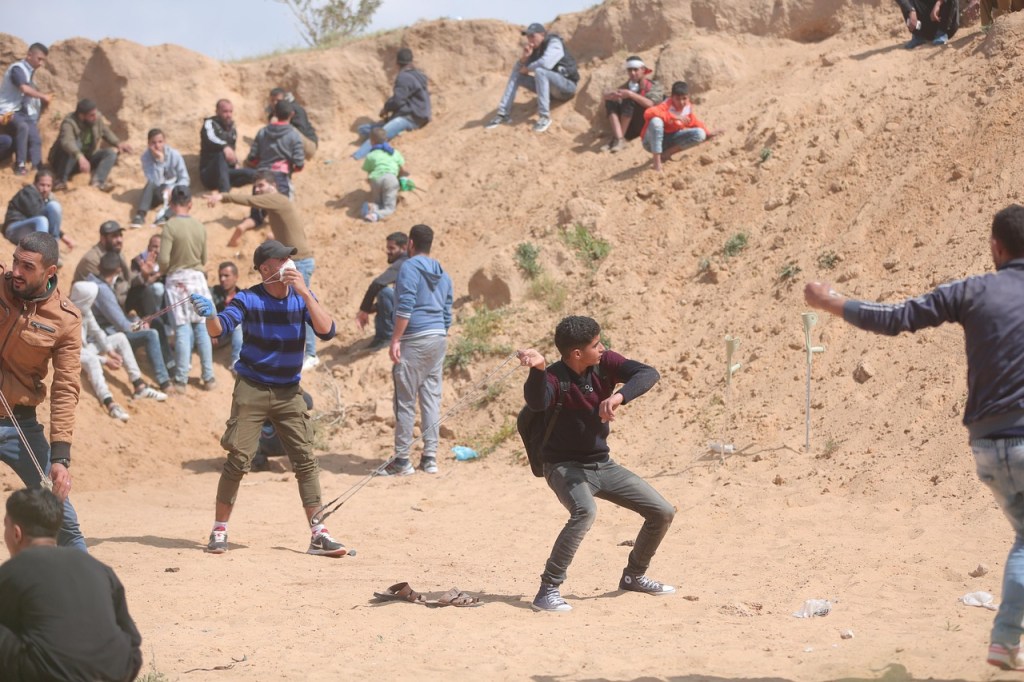
Palestinians in Gaza face an impossible choice: starve or risk being shot while trying to reach food to feed their families
The 400 aid distribution points operating during the temporary ceasefire across Gaza have now been replaced by just four military-controlled distribution sites.
Gazans are being forced into overcrowded, militarised zones where they face daily gunfire – resulting in mass casualties – while trying to access food.
The weeks following the launch of the Israeli distribution scheme have been some of the deadliest and most violent since October 2023.
In less than four weeks, more than 500 Palestinians have been killed and almost 4,000 injured just trying to access or distribute food.
Israeli forces and affiliated armed groups now routinely open fire on desperate civilians risking everything just to survive.
The humanitarian system is being deliberately and systematically dismantled by the Government of Israel’s blockade and restrictions.
This blockade is now being used to justify shutting down nearly all other aid operations in favour of a military-controlled alternative that neither protects civilians nor meets basic needs.
More than 100 days since Israeli authorities reimposed a near-total blockade on aid and commercial goods, Gaza’s humanitarian conditions are collapsing faster than at any point in the past 20 months.
Under the Israeli government’s new scheme, starved and weakened civilians are being forced to trek for hours through dangerous terrain and active conflict zones, only to face a violent, chaotic race to reach fenced, militarised distribution sites with a single entry point.
There, thousands are released into chaotic enclosures to fight for limited food supplies. These areas have become sites of repeated massacres in blatant disregard for international humanitarian law.
Orphaned children and caregivers are among the dead, with children harmed in over half of the attacks on civilians at these sites.
With Gaza’s healthcare system in ruins, many are left to bleed out alone – beyond the reach of ambulances – and denied lifesaving medical care.
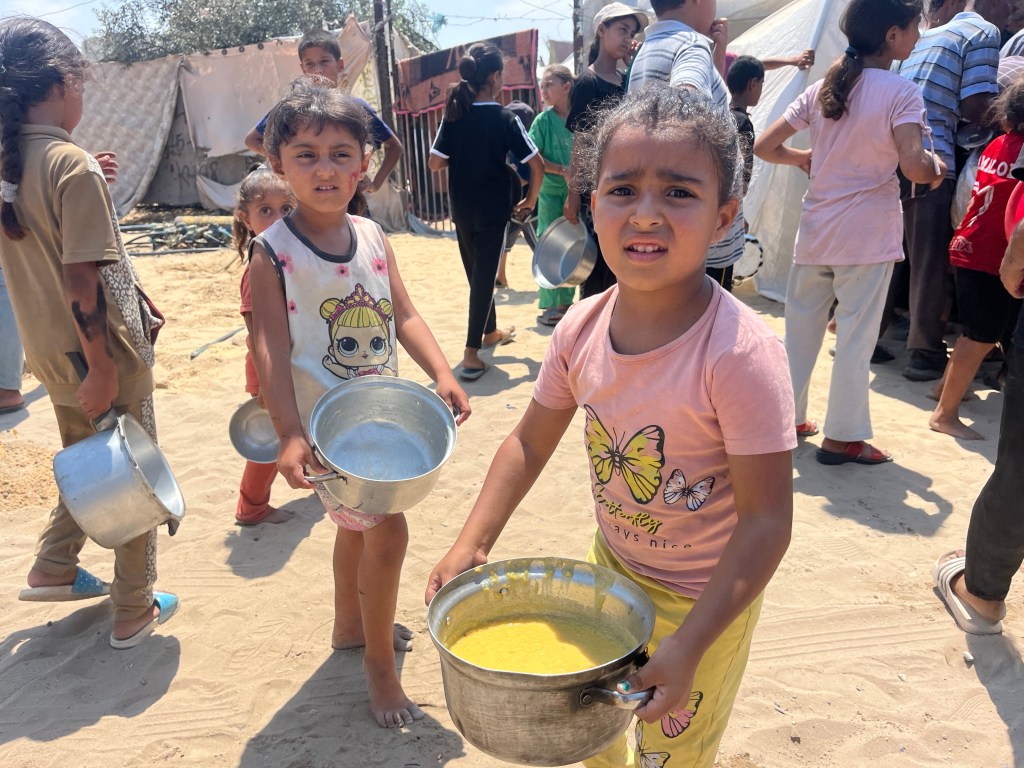
Amidst severe hunger and famine-like conditions, many families say they are now too weak to compete for food rations.
Those who do manage to get food often return with only a few basic items, which are nearly impossible to prepare without clean water or fuel to cook with.
Fuel is almost depleted, bringing critical lifesaving services – including bakeries, water systems, ambulances, and hospitals – to a standstill.
Families are sheltering under plastic sheets, operating makeshift kitchens amid the rubble, without fuel, clean water, sanitation, or electricity.
Concentrating more than two million people into even more confined areas for the chance to feed their families is not a plan to save lives.
For 20 months, more than two million people have been subjected to relentless bombardment, the weaponisation of food, water, and other aid, repeated forced displacement, and systematic dehumanisation – all under the watch of the international community.
The Sphere Association, which sets minimum standards for quality humanitarian aid, has warned that the Gaza Humanitarian Foundation’s approach does not adhere to core humanitarian standards and principles.
International disability charity Humanity & Inclusion, along with more than 200 non-governmental organisations, is calling for an immediate end to the Israeli distribution scheme (including the so-called Gaza Humanitarian Foundation) in Gaza.
The organisation says starvation is driving disability in Gaza and is calling for the restoration of a unified, UN-led coordination mechanism grounded in humanitarian law and inclusive of UNRWA (United Nations Relief and Works Agency for Palestinian Refugees in the Near East), Palestinian civil society and the wider humanitarian community.
“As starvation hits everyone in the Gaza Strip, it leaves a disproportionate impact on children and people living with disabilities,” says Humanity & Inclusion UK’s executive director, George Graham.
“Malnutrition is a leading cause of disability. We risk an entire generation being born with disabilities due to famished and malnourished mothers.”
Despite the existence of life-saving aid, including food, water, medical supplies and fuel, much of it remains stuck in warehouses, including inside Gaza, because of the siege imposed by Israeli authorities.
Deliveries currently average only 28 trucks a day for more than two million people. This is far below the 500 to 1,000 trucks Gaza received daily before the war.
During the ceasefire in February 2025, an average of 600 trucks were entering per day and yet they were not enough.
The consequences of this deliberate obstruction are devastating, especially for vulnerable populations.
More than 83% of people with disabilities have lost their assistive devices, leaving them unable to move, seek help, or evacuate.
Newborns denied formula and clean water are dying. Many are being born with disabilities such as cerebral palsy due to maternal malnourishment.
Nutritional deficiencies are weakening immune systems, worsening injuries, delaying healing, and compounding health complications, particularly among those already living with disabilities.

According to the health authorities in Gaza, more than 123,000 people have been injured since the escalation in October 2023, including more than 4,000 people who have lost limbs.
Around 6,000 prosthetic devices are needed, including many for children, according to the World Health Organisation. Gaza now has the highest number of child amputees per capita in the world.
Humanity & Inclusion is on the ground in Gaza creating temporary prostheses in a new rehabilitation centre in Khan Younis.
But there are currently only nine prosthetics and orthotics technicians in the whole of Gaza – far too few to produce and fit the number of prosthetic devices needed for the thousands of people who have lost limbs. The pressure continues to grow.
The charity, along with many others, is campaigning to lift the Israeli government’s blockade on aid and commercial supplies and, of course, for an immediate and sustained ceasefire.
The damage already done, however, and the long-term ramifications, are devastating.





 Phone Calls from Palestine
Leave a comment